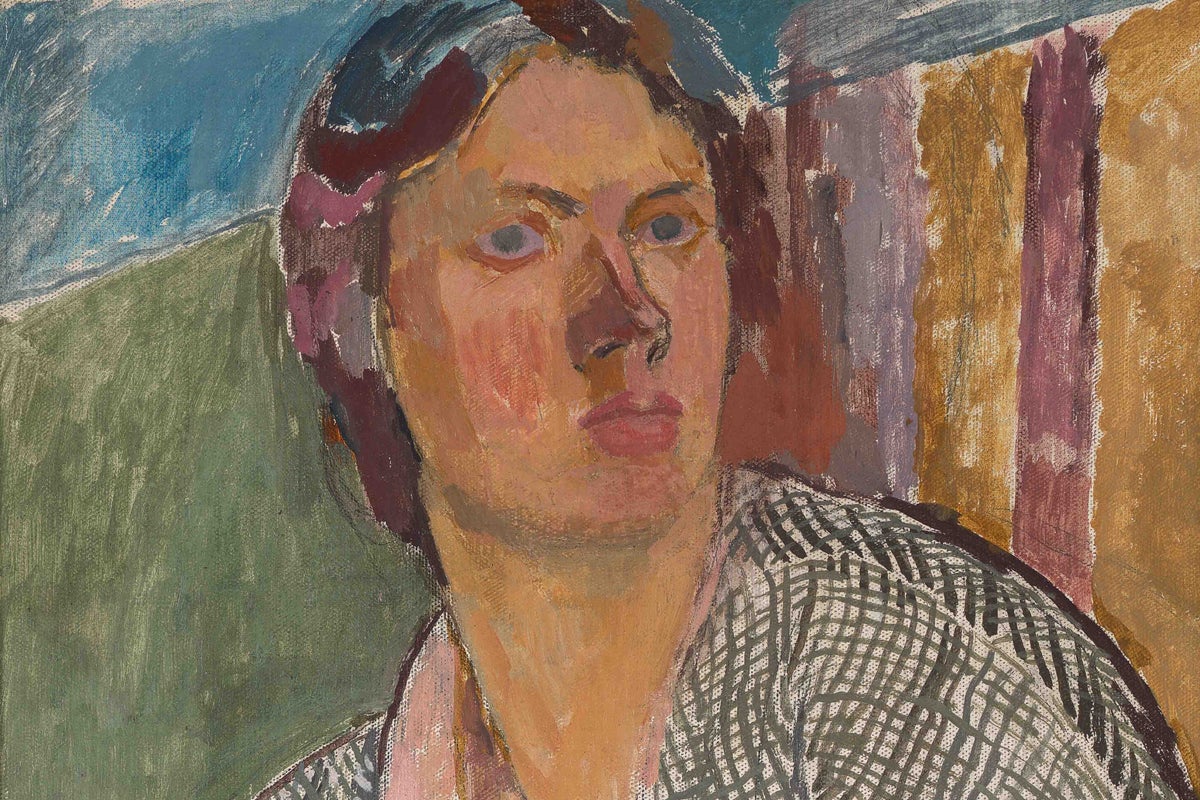
Oh, what a tangled web they weave, the Bloomsbury Group — or “Bloombuggers”, as their less charitable and more homophobic critics of yesteryear called them. It is precisely this deliciously complicated world of artistic endeavour, sexual entanglement and unconventional domesticity that comes flooding back in Tate Britain’s stunning and thoroughly joyful exhibition devoted to Vanessa Bell and Duncan Grant. Their partnership, which endured for more than fifty years, was an extraordinary mixture of passion, painting, loyalty and infidelity.
For newcomers to the Bloomsbury story, Vanessa was the sister of Virginia Woolf, and the daughter of Julia Stephen, who married the distinguished Victorian man of letters Leslie Stephen. He moved in a formidable literary and artistic circle, befriending figures including Disraeli, Tennyson, Rossetti and Edward Burne-Jones. Vanessa and Duncan were both products of this Victorian inheritance, yet they propelled themselves into the turbulent shallows – and occasionally deeper waters – of 20th-century avant-garde art and modern living.
And what a piccolo mondo it was. Duncan’s lovers included Vanessa’s brother Adrian, the economist John Maynard Keynes and the writer Lytton Strachey. Vanessa and Duncan’s own relationship was equally complicated, not least because their emotional and domestic lives were never confined by conventional notions of fidelity.
Allow me a small personal footnote in this cultural tapestry. I met Vanessa’s second son, Quentin Bell, when he came to speak to a literary society at my school in 1975. He talked about the Bloomsbury Group, and more than fifty years later I still remember his long beard and Edwardian elegance. He seemed even then almost the last surviving flourish of an era that was passing, but whose cultural influence was by no means exhausted.
This is a zestful exhibition. It is not necessarily revolutionary in the sense of inventing an entirely new artistic language, nor does it claim to have overturned the conventions of modern art. Rather, Bell and Grant absorbed the visual currency of their age and made it their own. They translated the influences around them into intensely personal worlds of colour, pattern, intimacy and sheer creative exuberance. They were not necessarily seeking to reinvent art; they were seeking to enjoy it, to live it and to make it part of everything around them.
There is something of an amateur’s zest about their work, but that should not be mistaken for a lack of accomplishment. Their enthusiasm is infectious, their visual imagination abundant. Shakespeare, after all, did not invent a single plot for his plays, but transformed familiar material through the genius of his language and imagination. Bell and Grant similarly took the artistic ideas of their time and invested them with their own sensibility. They deserve this superbly choreographed exhibition, and its accompanying catalogue is particularly successful: accessible, lively and generous in placing their work within its artistic and social context.
Both artists were born in the Victorian age but became advocates of twentieth-century freedom of expression, in art as much as in life. Their domestic arrangements were unconventional by the standards of the time. Lovers came and went, sometimes becoming part of the household, and the resulting emotional complications could be unsettling and painful. Yet, like homing pigeons, Bell and Grant repeatedly returned to their shared centre: their affection, admiration and creative dependence on one another.
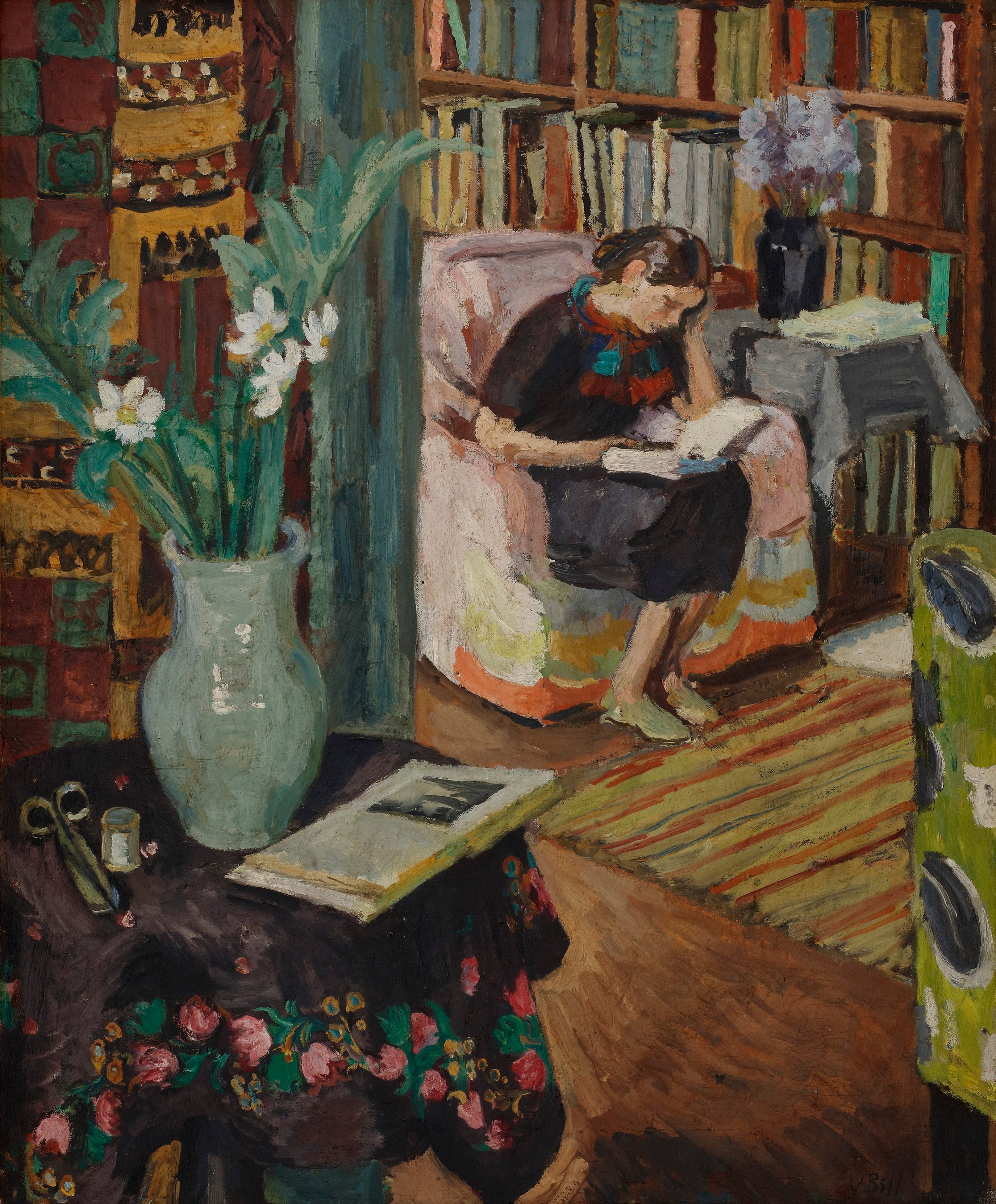
They painted each other, each other’s lovers, their children, their friends and the places in which they lived. Their art became a record of their intimate world. At the heart of it all was Charleston, the sixteenth-century farmhouse in East Sussex which became their home, studio and creative sanctuary for more than five decades. It was far more than a country retreat. Like Giverny for Monet, or Arles for Van Gogh, Charleston became inseparable from the artistic identity of its occupants. Its walls, furniture, ceramics and textiles were all potential canvases. The distinction between fine art and decoration, between the artist’s studio and domestic life, was cheerfully dismantled.
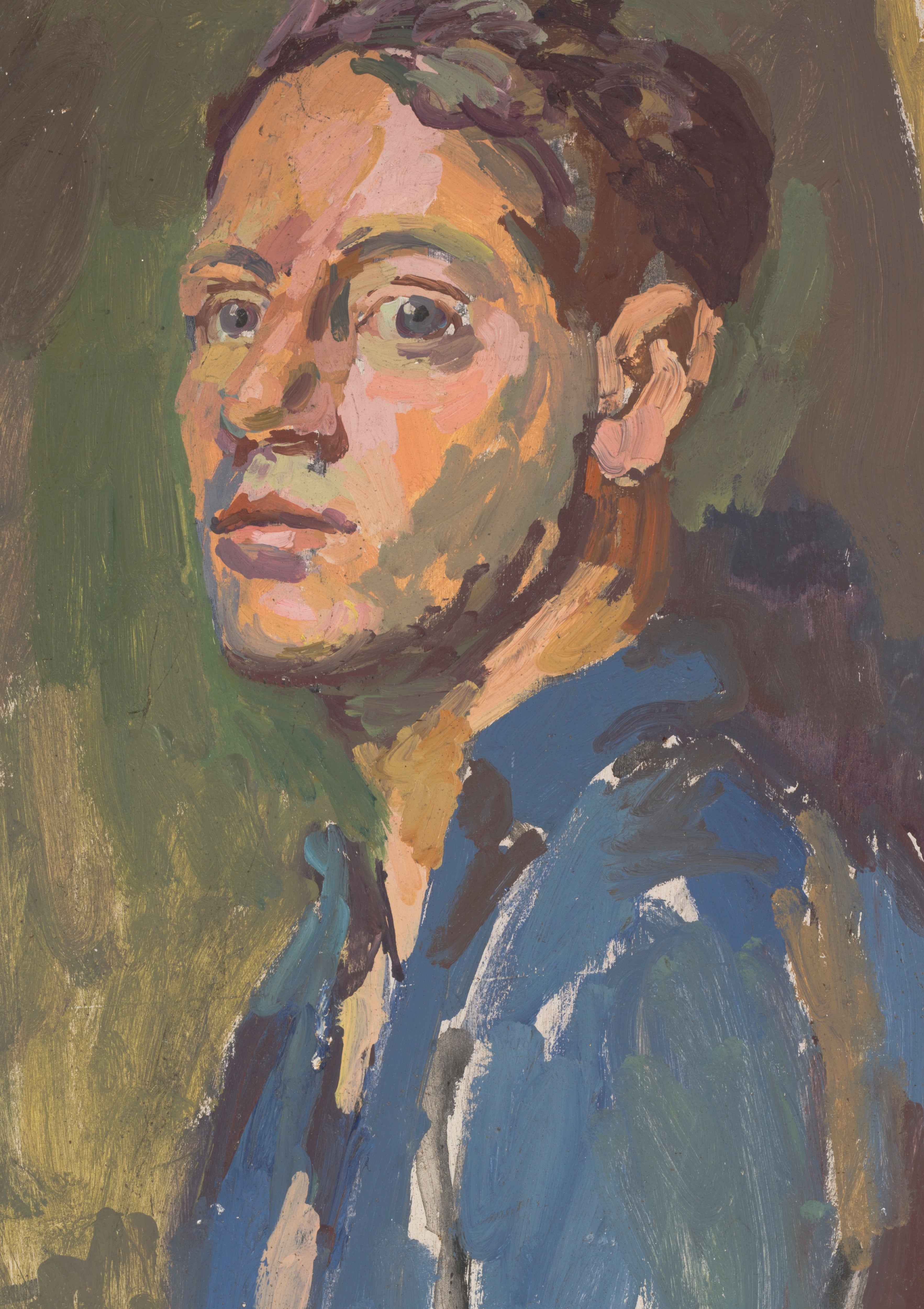
For years the pendulum of critical opinion has swung between Bloomsbury as an over-privileged, over-rated and self-regarding coterie, whose members owed more to their connections than to their originality, and Bloomsbury as one of the defining cultural forces of modern Britain. The literary critic John Carey, among others, has been sharply critical of their social exclusivity and intellectual self-satisfaction. Yet their admirers see a group that helped to change the way Britain thought about art, sexuality, domesticity and the individual freedom to live differently.
An influential art curator once shared with me an interesting observation: most people seem to go through three stages in their relationship with Bloomsbury. First comes fascination, as one is drawn into the glamour, the personalities and the sheer interconnectedness of the group. Then comes a degree of irritation, even derision, at their apparent smugness, privilege and self-absorption. Finally, there is a return to fascination and enjoyment: an appreciation of what they actually made, how they lived and how their influence seeped into British cultural life.
This exhibition makes a persuasive case for that third stage. And it has its sense of surprise too as we see into Duncan Grant’s boldest and most private territory. One of the most arresting sections brings together a selection of his intimate erotic drawings, marked “Very Private” and never intended for public consumption during his lifetime. From a much larger cache of several hundred drawings, these frank and spontaneous depictions of naked men in explicit sexual encounters offer an extraordinary glimpse into a private world that had to remain concealed. Their subjects and compositions are sometimes startlingly uninhibited, with men entwined in groups and in encounters that Grant recorded with an almost instinctive freedom of hand and eye.
It is tempting to view these drawings simply as an important contribution to queer art and history, and they certainly deserve that recognition. But they are more than historical documents of sexuality. They reveal an artist whose freedom of thought was matched by a freedom of execution. They also remind us of the constraints under which he lived. Male homosexual acts remained illegal in Britain until 1967, and the threat of prosecution and public disgrace meant that much of this work could never have been exhibited openly. What was once necessarily hidden now seems remarkably contemporary. Indeed, it is difficult not to wonder how such material might have been received by the tabloid press even twenty years ago. Today, it feels less scandalous than liberating.
The exhibition as a whole is a gem: a tour d’horizon of Bloomsbury, but also of the changing artistic fashions and possibilities of the 20th century, seen through the work of two artists who absorbed successive influences without necessarily becoming the inventors of new movements themselves. Their work moves between Post-Impressionist colour, abstraction, Cubist influences, figurative painting and decorative design. There are portraits, still lifes, landscapes, ceramics, textiles and furniture. Some paintings are charming rather than remarkable in isolation; others have a boldness and confidence that linger. But across the rooms runs a remarkable fecundity of imagination. One is left with the sense of two people for whom making things was not simply a profession but a way of being.
Praise for Grant was sometimes fulsome. Walter Sickert wittily declared: “Duncan conquered, he saw, he came.” And then there is Dorothy Parker’s put-down of the Bloomsbury circle: “Living in squares, painting in circles and living in triangles.” One might ask whether they were the Mitfords of their day: privileged, interconnected, endlessly fascinating, and somehow always at the centre of the conversation. But their cultural contribution was considerably more than a social phenomenon. Vanessa brought a distinctive visual intelligence to painting and design; Duncan moved fluidly between painting, decoration and the applied arts. Together, they helped make modernism part of the fabric of British domestic and cultural life.
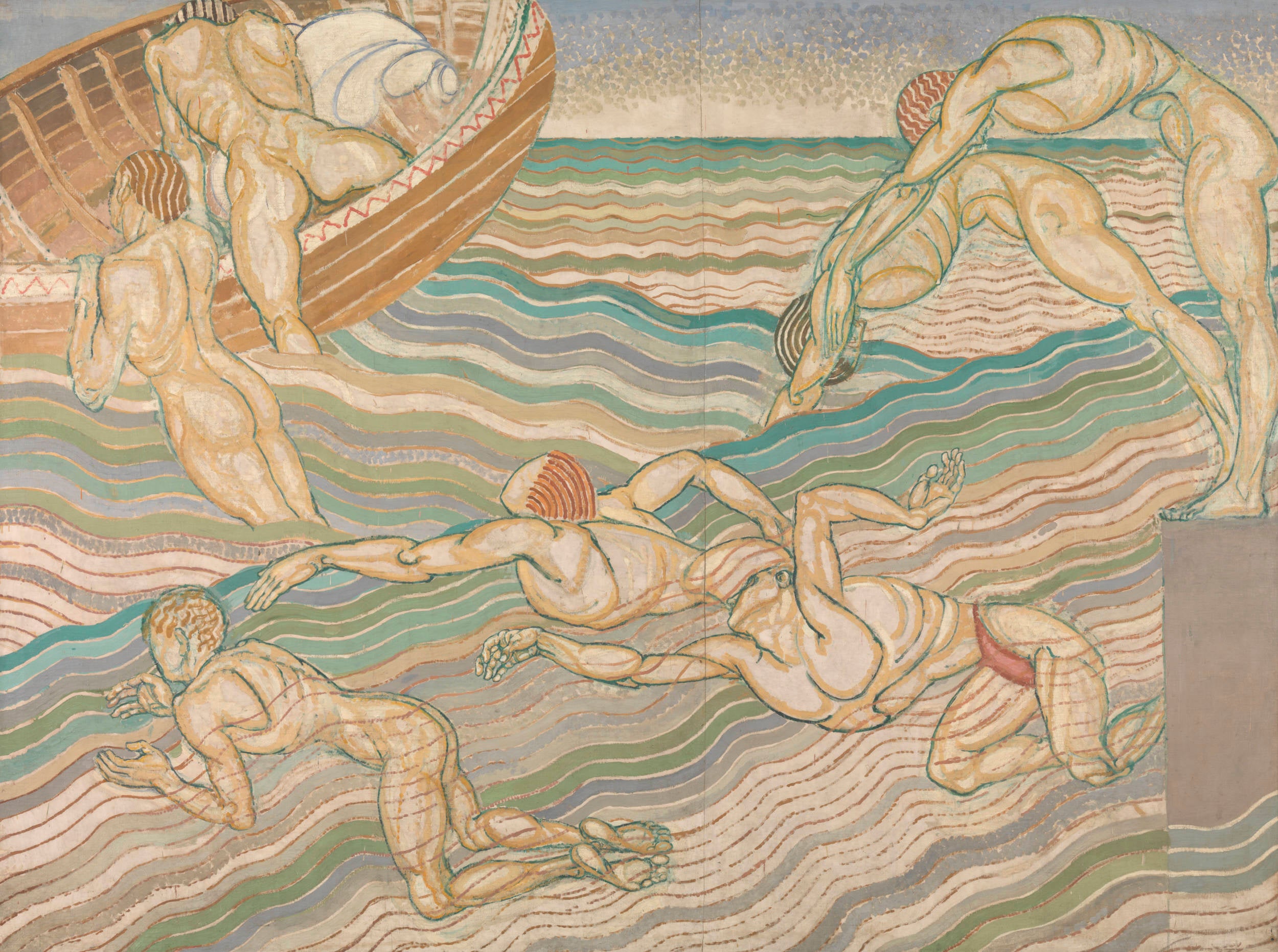
Their partnership lasted more than fifty years, but longevity should not be confused with ease. The letters and paintings reveal the agonies as well as the ecstasies. Their loose sexual arrangements could leave emotional scars, jealousy and hurt. There were moments of insecurity and disrepair. Yet both seemed to recognise that the bond between them, however difficult, was fundamental to their lives and their work. Their shared commitment to creating, and their enduring affection for one another, repeatedly proved stronger than the complications surrounding them.
And so to Charleston, the physical embodiment of their shared imagination. The exhibition’s extraordinary reconstruction of Duncan’s studio, brought to Tate Britain while conservation work is undertaken at the farmhouse, is a fitting culmination. It is not merely a recreation of a room but an evocation of an entire way of life. The colours, objects, furniture, books and accumulated paraphernalia convey the intimacy of a place where art was never separate from living.
Charleston was their refuge, their laboratory and their statement of intent. It demonstrated that art need not be confined to the gallery wall or the collector’s frame; it could inhabit a chair, a table, a painted cupboard, a plate or an entire room. It was a place where creativity was not an occasional activity but the organising principle of daily existence.
They may not have reinvented the language of modern art, but they helped to change the language of how art could be lived. And that is no small achievement. Tate Britain has given them a splendid tribute: a show that leaves both artists enhanced, and the visitor with a renewed appreciation of the extraordinary possibilities of art, affection and freedom.
‘Vanessa Bell & Duncan Grant: Inside Bloomsbury’ until 11 April 2027; tickets here