Nearly a decade has passed since Dominic Savage began his anthology project I Am – a series of standalone dramas centred on different women at pivotal moments in their lives. In that time, Lesley Manville has played a woman determined to start over, Kate Winslet a woman trying her best as a parent to a troubled teenager, Samantha Morton a woman facing poverty, Letitia Wright a woman whose new love is put under scrutiny, and Suranne Jones a woman on the brink of a breakdown. Now, in this latest chapter, Nicola Coughlan steps into the fray as Helen, a woman who finds herself suddenly and catastrophically trapped in a toxic relationship.
The word “toxic” has been thrown around a lot in recent years, used as a common prefix to everything from masculinity to politics, relationships, and workplaces. In the process, it’s lost some of the seriousness it once possessed – you can imagine “toxic” being now applied to a person who simply chooses to send lots of little texts instead of one long one. I Am Helen is concerned with the word’s more sinister origins.
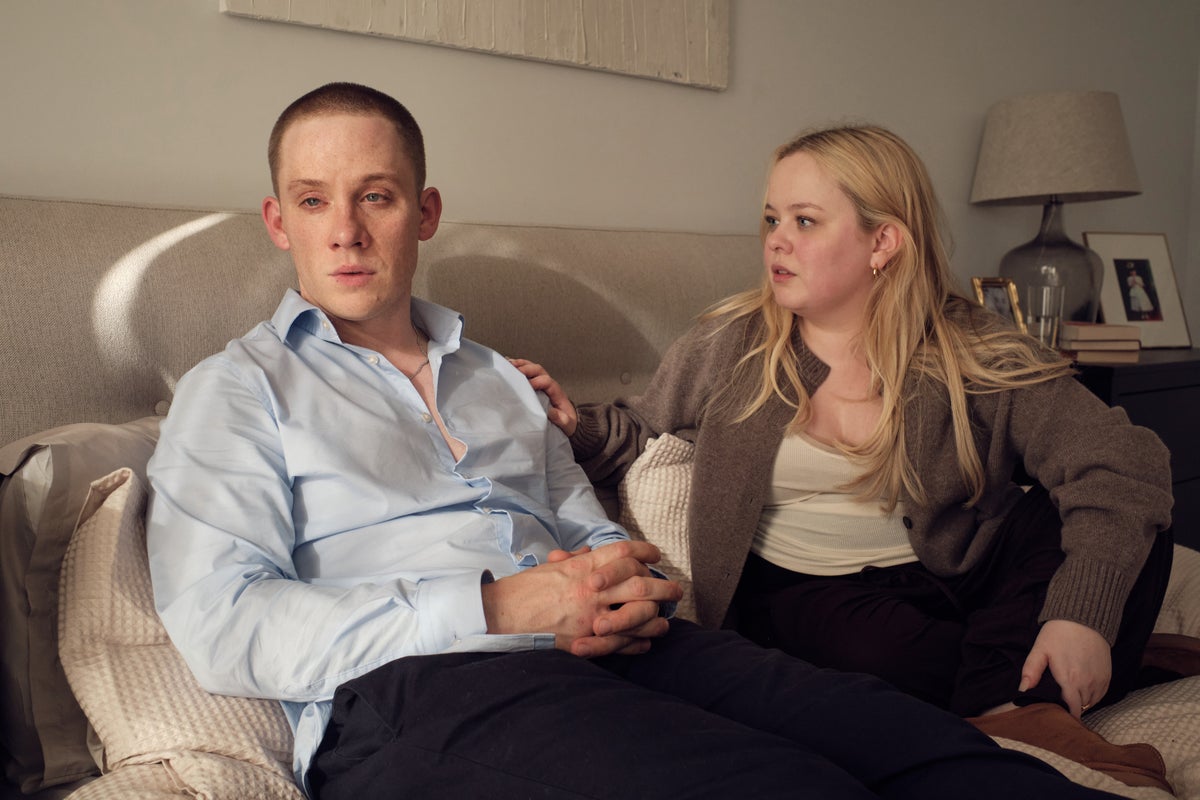
In a change of pace from the frothier shows that made her famous (including Bridgerton and Derry Girls), Coughlan takes on the role of Helen, a woman whose five-year relationship is turned on its head when her boyfriend Steve (Joe Cole) starts acting differently. Suddenly, he’s rough during sex without her consent, and is prone to violent outbursts. He’s become horrified by Helen’s career ambitions (“where does that leave me?”) and his desire to have children seems to come not from a place of love, but a need to control.
In many ways, this story recalls the first ever instalment of I Am, in which Vicky McClure played a woman caught in a coercive relationship. There are obvious similarities here. Both women, for example, have a keen awareness that their partner’s behaviour isn’t OK. Coughlan’s Helen stands up for herself repeatedly, doing what so many women are told to do, and setting clear boundaries for Steve. “I don’t like that. I will never like that,” she tells her partner when he tries to force her into extreme sex. When they try to first leave, both women are manipulated into staying by their partners.
Unlike the McClure chapter, though, I Am Helen spends some time focusing on Cole’s Steve, who seems to be – at least partly – also caught off-guard by his transformation. The reasons for his misogyny are not simple, nor are they singular. Yes, Steve begins watching violent pornography. Yes, he begins spending time with a friend at work who espouses rhetoric about traditional gender norms that can be summed up as “women should shut up and stay in the kitchen”. When this co-worker tells Steve he hits his wife if she is ever “out of line”, Steve laughs it off and says he doesn’t know whether he’s joking. But the real reasons for Steve’s behaviour are more nebulous, and impossible to articulate fully within this three-act story arc.
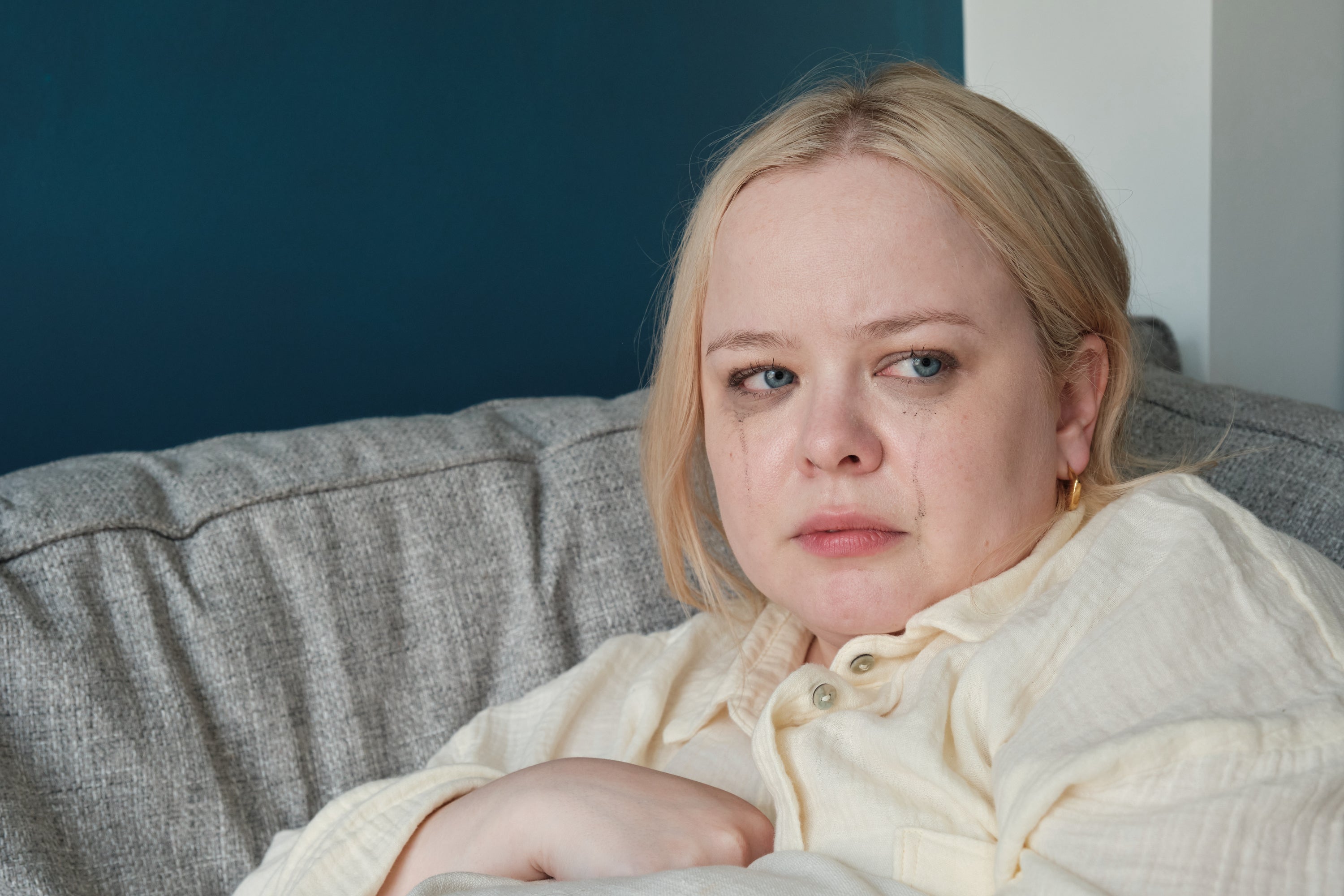
Cole is apt at telegraphing the confusion, blind rage, and overwhelming guilt of his character. It is Coughlan, though, who is the show’s beating heart. And nowhere is that more evident than in a doctor’s-office scene in episode two when Helen looks head-on at a situation she has been trying so hard to minimize in her periphery. Camera close on her face, Helen tells the doctor: “I feel like he’s very close to hurting me.” That realisation hovers over the rest of the series like an oppressive cloud. Even when Steve is not in frame, Helen is terrified.
As has always been the case with this series, the dialogue is naturalistic, almost to a fault. You get the sense that this would work spectacularly as a play, really dialling up the claustrophobia and terror between Helen and Steve. That said, it’s plenty tense on screen. One sequence, in which Helen has a small window of time in which to pack her belongings and get out of there, plays out like a horror movie.
It’s never so obvious as to bang you over the head with it, but the manosphere certainly figures in this story. Savage does well, though, to keep his lens tight on the specificities of Helen and Steve as a couple in crisis rather than make an attempt at some state-of-the-nation polemic. The series says enough as it is.